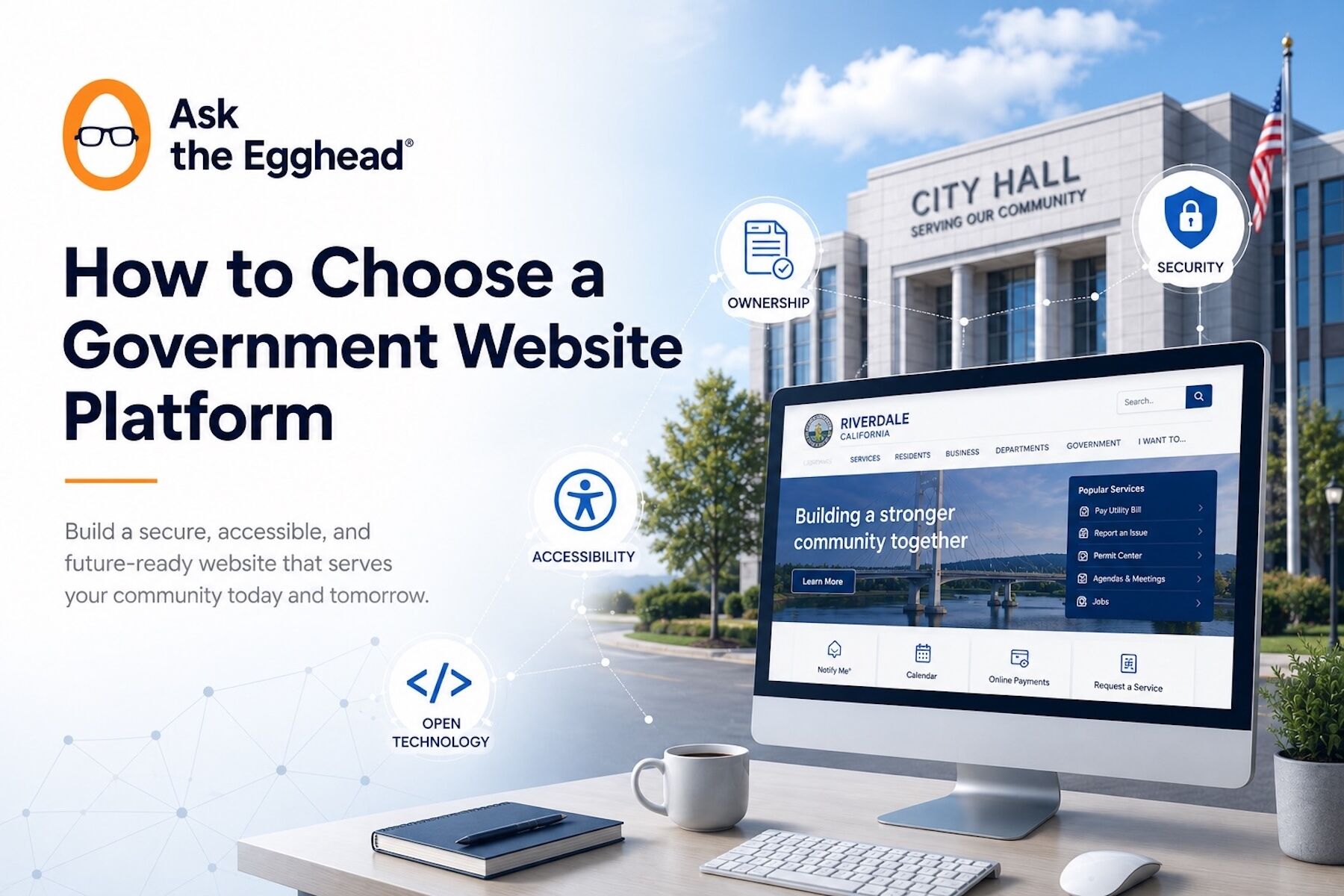
When your city or town decides it’s time for a new website, the number of available platforms can feel overwhelming. Every vendor promises a modern design, powerful features, and an easy-to-manage solution. But before comparing feature lists, there’s a more important question to ask:
Who will actually own your website when the project is complete?
That single question can have a greater impact on your municipality’s future than almost any other purchasing decision.
Think Beyond the Initial Launch
Many local governments focus on the upfront cost of redesigning their website. While budget matters, the real cost of a government website extends far beyond launch day.
Over the life of a website, municipalities should evaluate:
- Ongoing licensing or subscription fees
- Website maintenance costs
- Accessibility compliance requirements
- Data portability
- The cost and complexity of switching vendors in the future
Looking at the total cost of ownership over several years provides a much clearer picture than comparing initial proposals alone.
Ownership Matters More Than You Think
A government website is one of a municipality’s most valuable digital assets. It contains years of public information, documents, meeting agendas, forms, news, and community resources.
When evaluating platforms, ask whether your municipality truly owns:
- Your website content
- Your website design
- Your data
- Your files and documents
- The underlying website platform
An open platform gives governments greater flexibility and control over their digital presence. A proprietary platform may limit how easily content and data can be moved if your needs change later. As the Ask the Egghead content strategy emphasizes, the distinction between owning your website and effectively renting it should be part of every purchasing decision.
Accessibility Should Be Built In
Website accessibility is no longer optional for local governments.
As ADA Title II compliance deadlines approach, municipalities need platforms that make accessibility an ongoing priority rather than an afterthought.
Look for a platform that supports:
- Accessible page templates
- Proper heading structures
- Keyboard navigation
- Alternative text for images
- Ongoing accessibility improvements
Choosing the right platform today can make future compliance significantly easier.
Don’t Get Locked Into One Vendor
One of the biggest challenges municipalities face is vendor lock-in.
Changing website providers shouldn’t require rebuilding everything from scratch or losing years of work. Before signing a contract, ask questions about:
- Exporting your website content
- Access to your files
- Ownership of custom functionality
- Migration options
- Exit terms
The easier it is to move your website elsewhere, the more control your municipality maintains over its investment.
Evaluate Long-Term Value
The best government website platform isn’t necessarily the one with the flashiest sales presentation.
Instead, evaluate how well it supports your organization over the next five to ten years.
Consider whether it provides:
- Flexibility for future growth
- Strong security practices
- Easy content management
- Long-term sustainability
- Clear ownership of your digital assets
These factors often deliver more value than simply choosing the lowest initial bid.
Make an Informed Decision
Selecting a government website platform is about more than technology—it’s about protecting your municipality’s investment and ensuring your community has a reliable, accessible digital presence for years to come.
By focusing on ownership, portability, accessibility, and long-term costs instead of short-term marketing promises, local governments can make decisions that continue to benefit residents long after the website launches.
Ready to build a government website you truly own? Contact Ask the Egghead today to learn how an open, WordPress-based solution can give your municipality greater flexibility, long-term value, and complete control over its digital future.