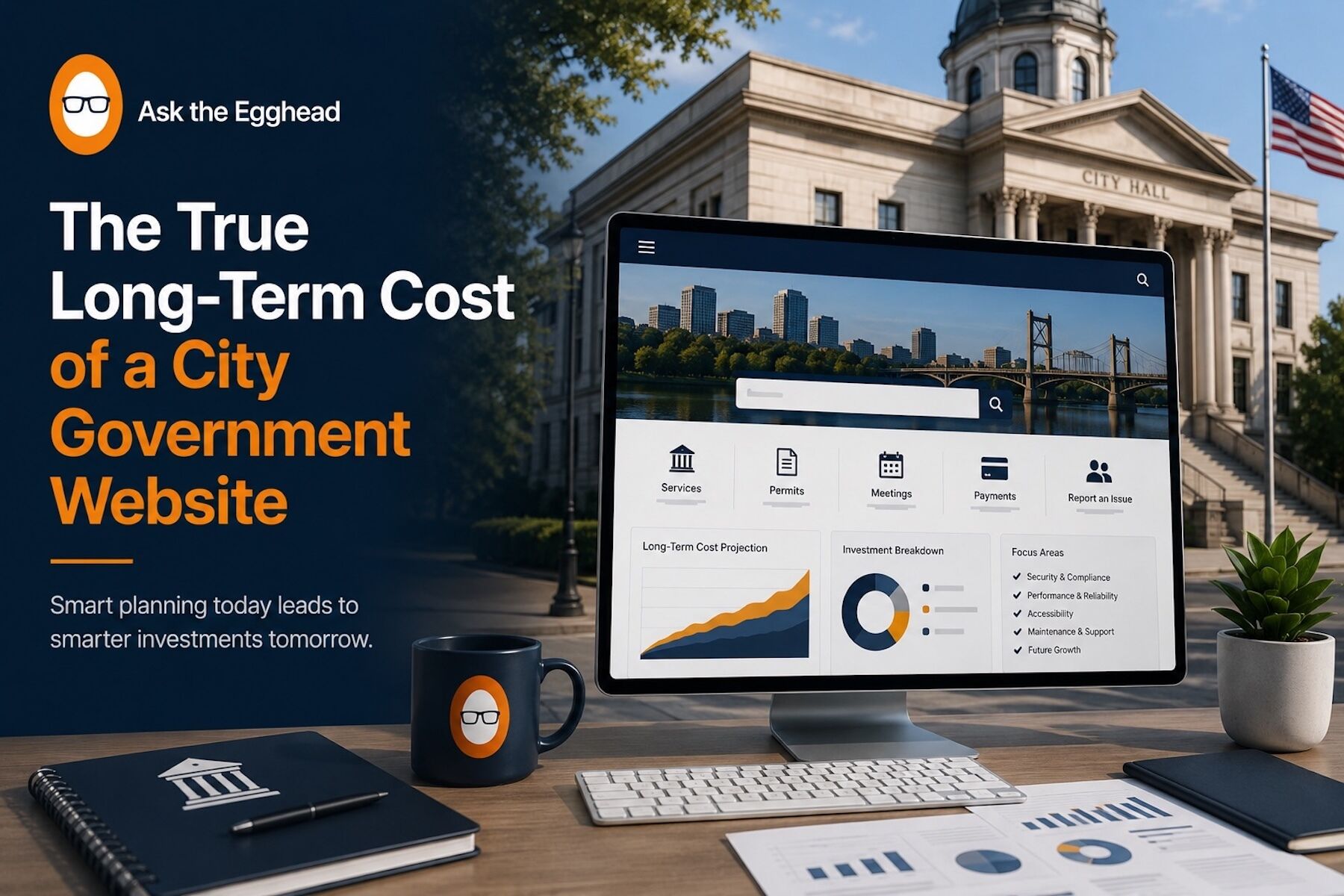
When a city, town, or county begins planning a new website, one of the first questions is predictable: How much will it cost? Unfortunately, the initial proposal rarely tells the whole story.
Understanding the true city government website cost means looking beyond design and launch. Municipal leaders need to consider recurring expenses, future changes, and even what happens when they eventually want to switch vendors or platforms.
A realistic budget considers the entire life of the website—not simply what it costs to launch.
The Four Costs of a Municipal Website
A municipal website cost can generally be divided into four categories: the initial build, recurring expenses, change costs, and exit costs.
Looking at all four provides a much clearer picture of what a website may cost taxpayers over five or ten years.
1. Initial Website Design and Development
The first expense is the most visible: designing and building the website.
This can include website design, development, content migration, configuration, testing, and launch. Costs naturally vary depending on the size of the government, the amount of existing content, and the functionality required.
Comparing development proposals is worthwhile, but a low initial price does not necessarily mean a lower long-term cost.
2. Recurring Hosting, Maintenance, and Support
Once the website launches, the recurring expenses begin.
Hosting, maintenance, security updates, technical support, and software costs can continue for the entire life of the website. This is where the choice between proprietary and open-source platforms becomes particularly important.
Proprietary solutions typically include recurring licensing or subscription fees. Those fees may also increase when contracts renew.
Open-source platforms such as WordPress do not charge a license fee for the core software. Governments still need professional hosting, security, maintenance, and support, but those services can potentially be competitively sourced instead of being tied to a proprietary software license.
For organizations evaluating their options, Ask the Egghead’s https://www.asktheegghead.com/services/managed-wordpress-hosting/ provides additional information about professionally managing and supporting WordPress websites.
3. The Cost of Future Website Changes
Government websites rarely remain unchanged.
Departments may need new forms, integrations, redesigned sections, or functionality that was never anticipated during the original project.
With proprietary platforms, work outside the platform’s standard capabilities may need to go through the original vendor at its rates and according to its schedule. With an owned open-source website, organizations can generally hire qualified developers competitively.
Individual projects may seem small, but years of updates can make change costs an important part of government website pricing.
4. Don’t Forget the Exit Cost
One of the easiest expenses to overlook is what happens when your government decides to leave its existing platform.
With some proprietary systems, changing platforms can require rebuilding the website because the underlying software, templates, and custom development remain tied to the vendor. Content may be exportable, but development, content reformatting, redirects, and staff training can become another significant project.
With an owned open-source website, the situation can be substantially different. The organization keeps the working website and can change service providers rather than automatically rebuilding everything.
This is why municipalities should ask prospective vendors to explain their exit process and costs before signing a contract.
Calculate a 10-Year Website Budget
Instead of asking only, “How much does a government website cost?”, calculate the total cost of ownership.
Consider the initial build plus ten years of hosting, maintenance, support, anticipated price increases, future development, and eventual exit costs. Applying the same calculation to every proposal creates a more meaningful comparison.
An option that appears inexpensive during procurement may become significantly more expensive after years of subscriptions, changes, and vendor dependency.
Website Ownership Changes the Equation
An owned WordPress website will not necessarily be the least expensive option in the first year. The more important question is what the municipality will spend—and what it will own—over the website’s complete lifecycle.
Before approving your next local government website budget, compare long-term costs, ask vendors who owns the finished website, and get exit terms in writing.
Ready to explore an approach that gives your organization greater control over its website? https://www.asktheegghead.com/ to discuss your municipal website, hosting, and long-term WordPress strategy.