Someone discovers your nonprofit for the first time.
They visit your website because a friend shared your organization, they saw one of your events, found you through a search engine, or heard about your work in the community.
Within seconds, that visitor begins forming an impression.
They may understand your mission. They may even believe in it.
But then what?
The most effective nonprofit websites do not stop at explaining the mission. They give people clear opportunities to become part of it.
A nonprofit website should help transform curiosity into participation.
Every Visitor Needs a Next Step
Different people arrive at your website for different reasons.
One visitor may want to donate.
Another may want to volunteer.
Someone else may need your services.
A local company may be interested in becoming a sponsor.
A journalist might need organizational information.
A longtime supporter may simply want to know when your next event is happening.
Your website should anticipate these needs and provide obvious paths forward.
If visitors must search through multiple menus and pages to discover how to participate, many will leave before taking action.
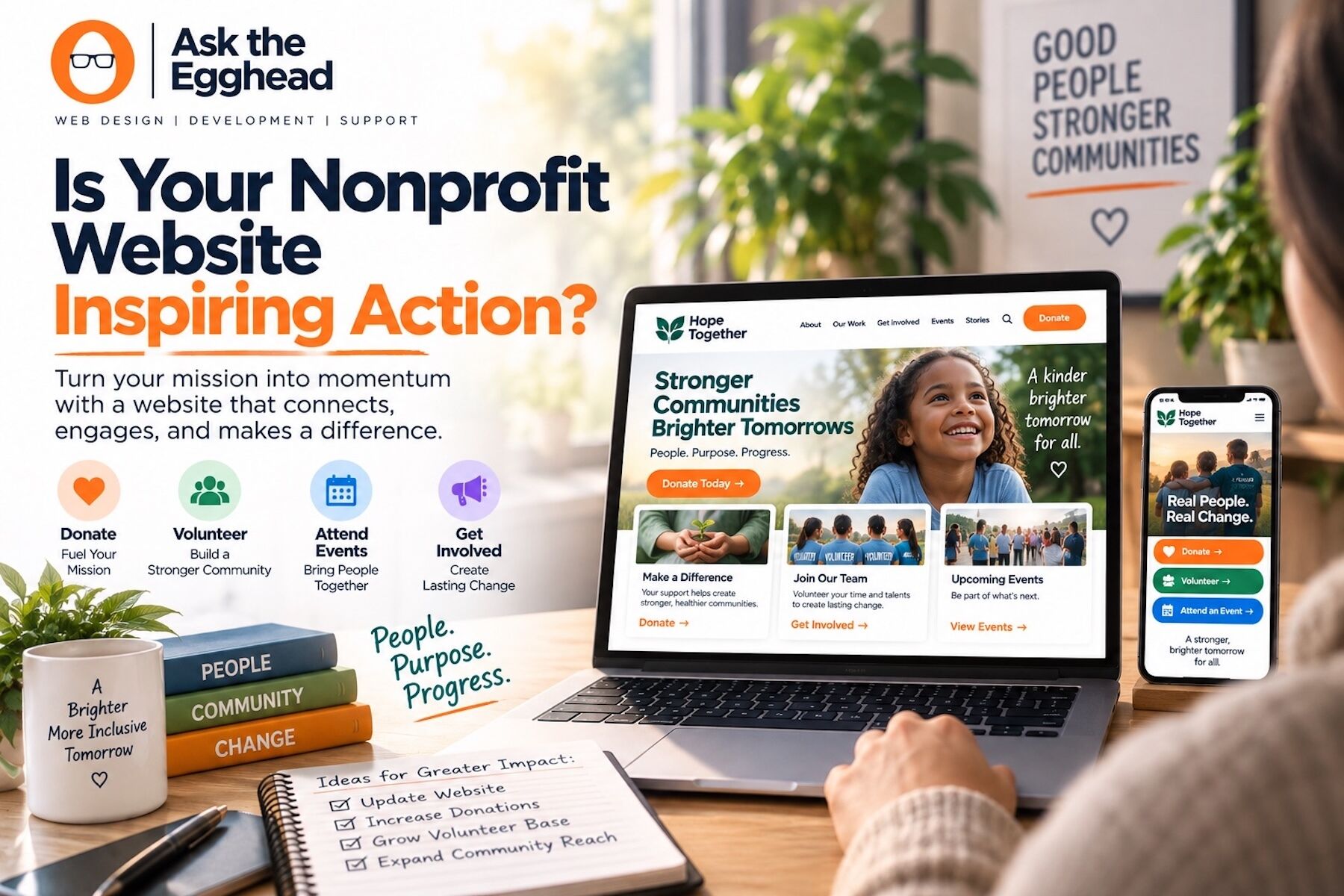
Clear calls to action such as Donate, Volunteer, Get Help, Attend an Event, and Join Our Newsletter can dramatically improve the experience.
Tell Stories, Not Just Statements
Most nonprofits have a mission statement.
Far fewer effectively demonstrate what that mission looks like in practice.
Your website provides an opportunity to tell the stories behind your work.
Highlight the communities you serve. Share program achievements. Feature volunteers. Publish meaningful statistics. Showcase partnerships. Explain how donations are being used.
Instead of simply telling visitors that your organization is creating change, help them see that change.
Stories and measurable outcomes can make an organization feel more transparent, credible, and tangible.
Build Trust Before Asking for Support
Before someone gives money, time, or personal information to an organization, they often want reassurance.
Your nonprofit website plays an important role in establishing that trust.
Visitors may look for information about your leadership, programs, financial transparency, community involvement, history, and contact information.
Professional design matters as well.
Outdated pages, broken links, missing information, security warnings, or a poorly functioning mobile experience can unintentionally create uncertainty.
Your website does not need to be extravagant.
It needs to feel current, reliable, organized, and trustworthy.
Make Mobile Visitors a Priority
Many supporters will encounter your nonprofit through social media, email, or a shared link on their phone.
That means your mobile website may be their first experience with your organization.
Buttons should be easy to tap. Text should be readable. Donation forms should work smoothly. Navigation should remain simple.
A complicated mobile experience creates unnecessary barriers between your organization and someone who is ready to participate.
Website speed matters too. Large images, outdated plugins, poor hosting, and unnecessary website features can make pages load slowly and discourage visitors from continuing.
Accessibility Expands Your Reach
Nonprofits are often built around serving communities.
Your website should reflect that same principle.
Website accessibility helps people with different abilities interact with your content, navigation, forms, images, and digital resources.
Improving accessibility can include better heading structures, descriptive links, alternative text for meaningful images, keyboard-friendly navigation, readable color contrast, and clearly labeled forms.
These improvements not only support accessibility. They often create a cleaner and easier experience for every visitor.
Think of Your Website as a Team Member
Imagine having a team member available around the clock who could explain your mission, answer common questions, collect donations, recruit volunteers, promote events, share resources, and introduce new people to your organization.
That is what your website should be doing.
A nonprofit website should not exist simply because organizations are expected to have one.
It should actively contribute to the organization’s goals.
Ask the Egghead helps organizations build, host, maintain, and improve WordPress websites so their digital presence can become a dependable part of their mission.
If your nonprofit website is explaining your mission but not inspiring enough action, contact Ask the Egghead. Let’s turn your website into a platform that helps your organization reach more people and accomplish more.