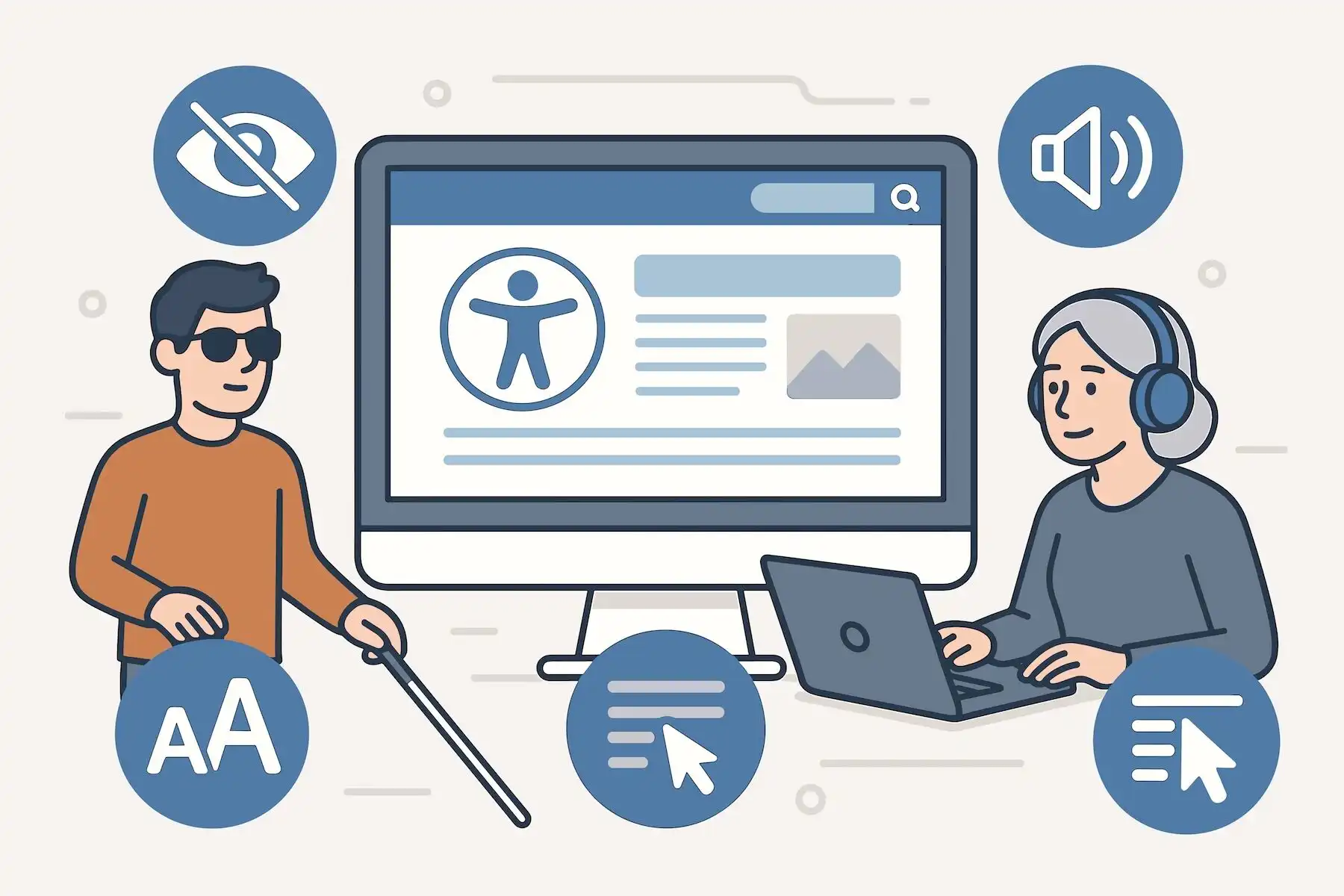
Your website could be putting your business at legal risk right now — and there’s a good chance you don’t even realize it.
Every day, business owners receive demand letters and lawsuit notices because their websites fail to meet accessibility standards. These notices rarely come with warnings. They come with deadlines, legal language, and potential financial consequences. And the most unsettling part? Many of these business owners thought accessibility didn’t apply to them.
It does.
Accessibility Compliance Is Now a Legal Target
Website accessibility has become one of the fastest-growing areas of digital litigation. In recent years, thousands of businesses have been sued annually for websites that are not accessible to users with disabilities. The number continues to rise as legal firms actively seek out non-compliant websites.
Most of these lawsuits cite violations of the Americans with Disabilities Act (ADA). Courts are increasingly ruling that websites are considered “places of public accommodation,” meaning they must be usable by individuals with disabilities.
If your website cannot be navigated by a screen reader, lacks proper contrast, or fails keyboard navigation tests, your business may already be vulnerable.
Small Businesses Are No Longer Safe
There is a common and dangerous myth that only large corporations are targeted for accessibility violations. In reality, small and mid-sized businesses are often easier targets because they’re less likely to have compliance protections in place.
Industries frequently affected include:
- Professional services
- Healthcare providers
- Restaurants and hospitality
- Retail and eCommerce
- Local service businesses
A single accessibility lawsuit can cost thousands of dollars in legal fees, even before remediation costs begin. For many businesses, that’s a financial hit they didn’t plan for — or need.
Ignorance Won’t Protect You
One of the most alarming aspects of accessibility law is this:not knowing your website is non-compliant does not protect you from liability.
Courts have consistently ruled that business owners are responsible for their digital properties, regardless of who built the site or when it was launched. Whether your website was created five months ago or ten years ago, compliance is still your responsibility.
“I didn’t know” isn’t a defense.“I used a template” isn’t a defense.“I’m a small business” isn’t a defense.
Accessibility Problems Are Often Invisible — Until It’s Too Late
Many accessibility issues aren’t obvious unless you know what to look for. Missing alt text, improper heading structures, inaccessible forms, poor contrast, or uncaptioned videos may go completely unnoticed by business owners — but they are immediately apparent to accessibility testing tools and legal auditors.
That’s why many lawsuits come as a shock. The website looks fine — but functionally, it excludes users and violates accessibility standards.
Compliance Is About Protection — and Opportunity
While legal risk is a powerful motivator, accessibility also improves usability, SEO, and customer trust. Accessible websites tend to perform better across the board and reach a wider audience.
But first and foremost, compliance protects your business from unnecessary risk.
Don’t Wait for a Letter — Get Ahead of the Problem
At Ask the Egghead, we help businesses identify accessibility risks before they become legal problems. Our accessibility compliance checks evaluate your website against WCAG standards, highlighting vulnerabilities and providing clear next steps.
If you’re unsure whether your website is compliant, that uncertainty alone is a risk.
Book an accessibility compliance check or consultation today and find out where your website stands — before someone else does.