Let’s do a quick experiment.
Imagine you’re visiting a business website because you’re interested in their services.
You reach the bottom of the page and see two buttons.
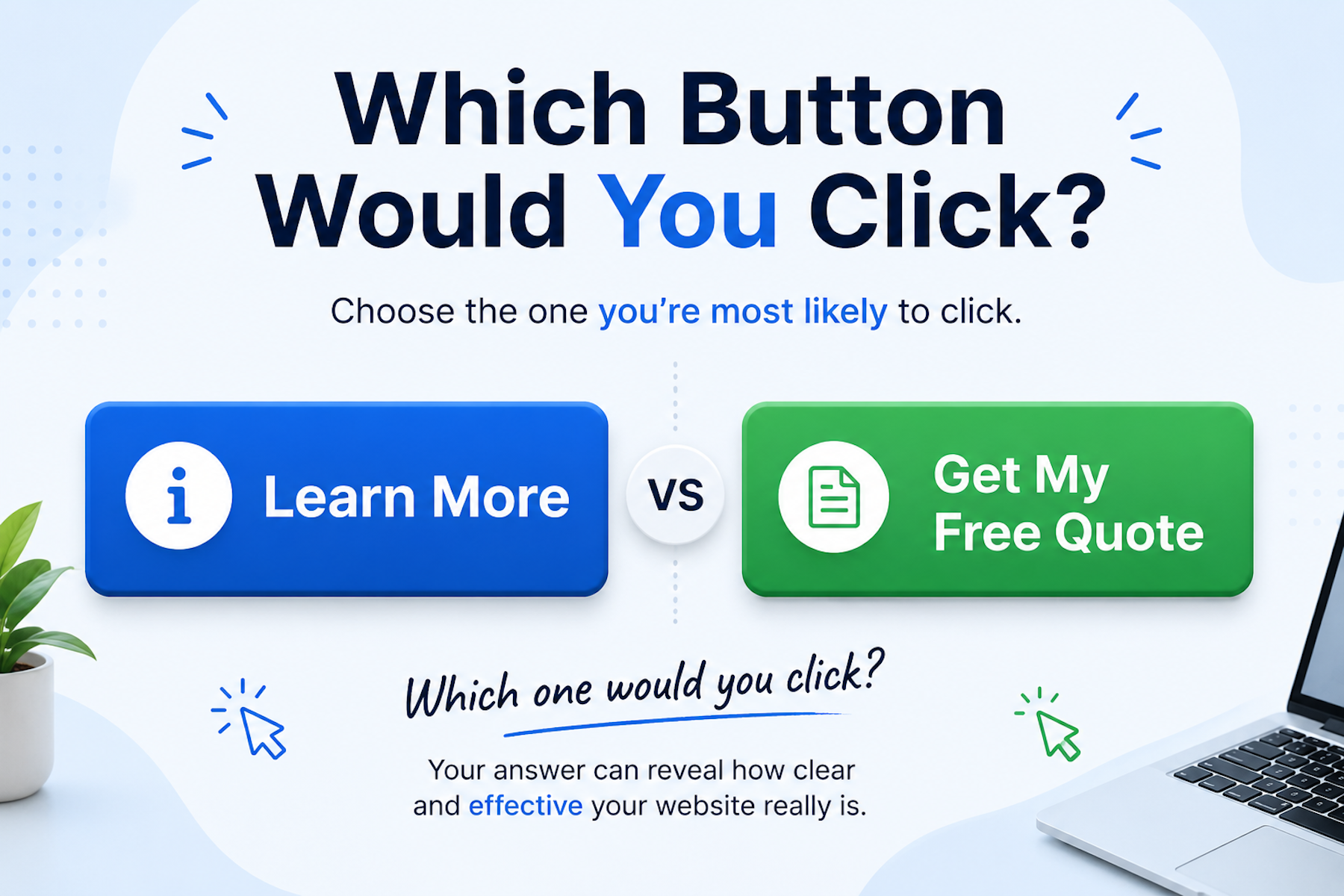
🔵 Learn More
🟢 Get My Free Quote
Which one would you click?
At first glance, it seems like a simple design choice. In reality, it’s one of the most important decisions on a website.
Your call-to-action (CTA) tells visitors what to do next. If it’s too vague, too passive, or doesn’t match what your audience is looking for, potential customers may leave without taking any action.
“Learn More” is a great option for people who are still researching. It feels informative and low-pressure, making it ideal for educational pages or visitors early in the buying process.
“Get My Free Quote,” on the other hand, speaks directly to someone who’s ready to take the next step. It’s clear, specific, and immediately communicates the value they’ll receive.
Neither option is automatically better.
The best CTA depends on your audience, your goals, and where the visitor is in their decision-making journey.
That’s why successful websites don’t rely on guesswork. They test.
Sometimes changing just a few words on a button can improve engagement, increase inquiries, and generate more qualified leads. Other times, the button itself isn’t the problem—its placement, color, or surrounding content may be preventing visitors from taking action.
At Ask the Egghead, we regularly help businesses improve website performance by focusing on these details. Conversion optimization isn’t always about rebuilding an entire website. Often, it’s about making thoughtful improvements that guide visitors toward becoming customers.
So here’s the question again.
Which button would you click?
🔵 Learn More
🟢 Get My Free Quote
Drop your answer in the comments—and tell us why. It would be interesting to see how different people approach the same decision. If you’ve never reviewed the calls-to-action on your own website, it might be time to see whether they’re encouraging visitors to act or quietly sending them elsewhere.