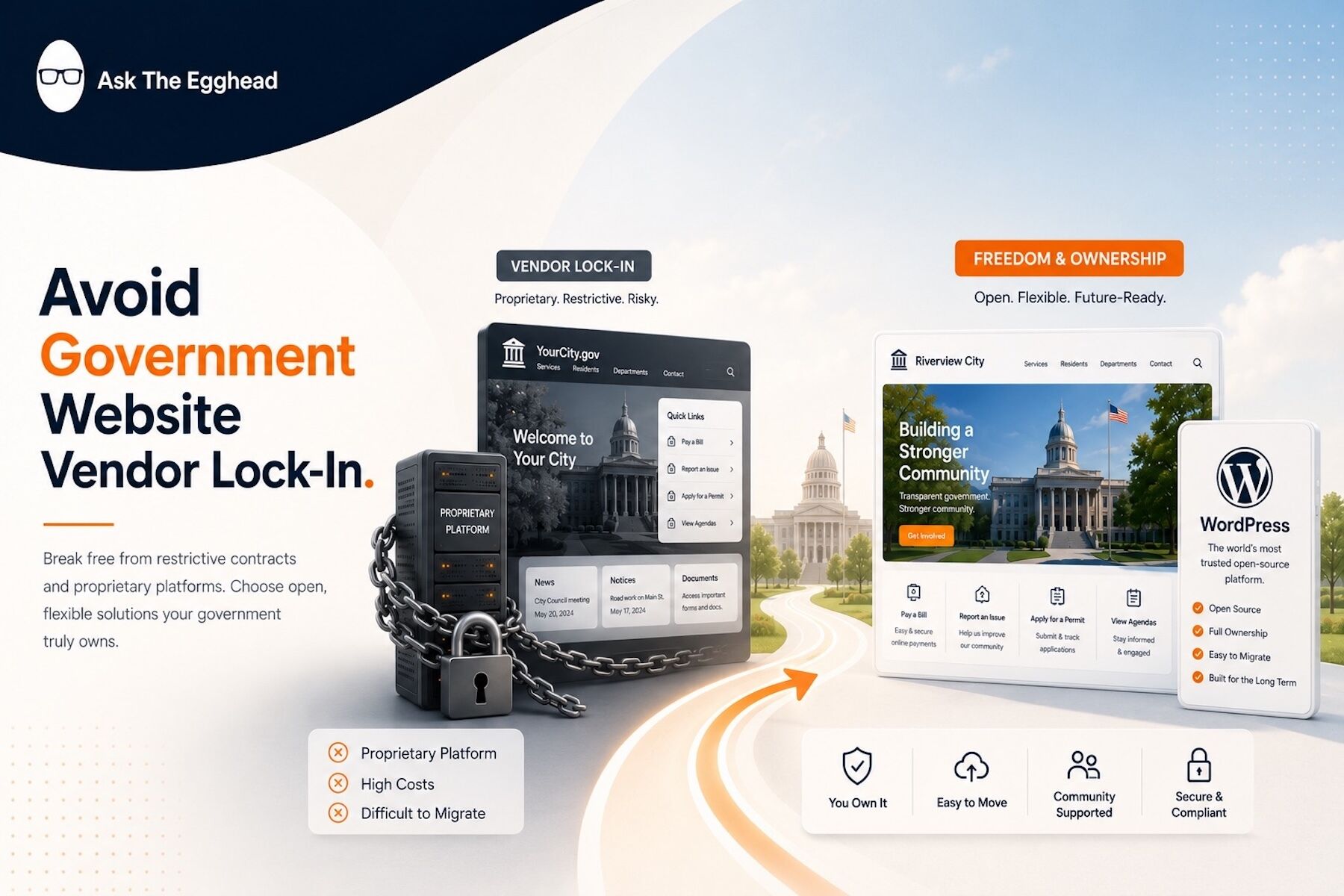
Choosing a new government website platform is a major investment, but many municipalities focus only on launch timelines, features, and upfront costs. What often gets overlooked is one critical question: What happens if you want to switch vendors in the future?
This is where government website vendor lock-in becomes a costly problem.
Vendor lock-in occurs when a website platform makes it difficult, expensive, or time-consuming to move to another provider. While proprietary government CMS platforms often promise powerful features, they can also create long-term dependencies that leave cities paying more than they expected over the life of their website.
What Is Government Website Vendor Lock-In?
Vendor lock-in isn’t usually caused by a single contract clause. Instead, it’s a combination of technical limitations and licensing restrictions that make leaving a platform challenging.
Many proprietary municipal website platforms allow you to export your content, such as pages, documents, and images. However, what you often can’t take with you is the website itself. The templates, navigation, custom functionality, integrations, and CMS remain tied to the original vendor.
That means when it’s time to migrate, you’re often rebuilding your website from scratch rather than simply moving it to a new host.
The Hidden Cost of Proprietary Platforms
At first glance, proprietary platforms may seem convenient because everything is bundled together. Over time, however, that convenience can become a disadvantage.
Municipalities may face:
- Expensive website rebuilds when changing vendors
- Manual content migration and formatting
- Staff retraining on a completely new system
- Additional costs for accessibility updates
- Limited flexibility when budgets or priorities change
These costs rarely appear during the procurement process, yet they can significantly impact future budgets.
Why Ownership Matters
Government websites are different from commercial websites.
Cities and counties have legal obligations to maintain public records, provide uninterrupted access to services, and comply with accessibility standards. A website isn’t just a marketing tool—it’s critical public infrastructure.
When your municipality owns its website, you control how and when updates happen. When a vendor controls the underlying platform, your ability to make improvements often depends on their timeline and pricing.
Open Source Gives Municipalities More Freedom
An open-source government website built on WordPress offers a different approach.
Because WordPress is open source, municipalities own their website and can host it with the provider of their choice. If circumstances change, they can work with another qualified partner without rebuilding everything from the ground up.
This flexibility provides several advantages:
- Greater control over website ownership
- Better long-term cost predictability
- Easier migration between hosting providers
- Freedom to choose the best support partner
- Reduced dependence on a single vendor
Open source doesn’t eliminate the need for maintenance or security, but it does ensure your city retains ownership of the platform you’ve invested in.
Questions Every Municipality Should Ask
Before signing with any government website vendor, ask these important questions:
- Can we move the entire website to another provider?
- Who owns the custom design and functionality we pay for?
- What does migration actually look like?
- How are accessibility updates handled?
- Are we tied to your hosting environment?
The answers will reveal whether you’re purchasing a website—or renting one.
Make the Right Long-Term Decision
A government website should serve your community for years to come, not lock your organization into a single vendor relationship. Understanding website ownership, data portability, and long-term flexibility before signing a contract can save significant time and taxpayer dollars down the road.
At Ask the Egghead, we help municipalities build secure, accessible, and fully owned WordPress websites that put control back where it belongs—with your organization. Contact us today to learn how an open-source website can protect your investment while giving your community the flexibility it deserves.